
Understanding Systematic Investment Plan: A Complete Guide

Updated: Jul 29
Systematic Investment Plan (SIP) have gained popularity among investors looking for a systematic approach to wealth accumulation. These plans offer a unique blend of investment strategies that can cater to various financial goals. In this comprehensive guide, we will explore what structured investment plans are, how they work, their benefits, and considerations to keep in mind when investing.
What Are Systematic Investment Plans?
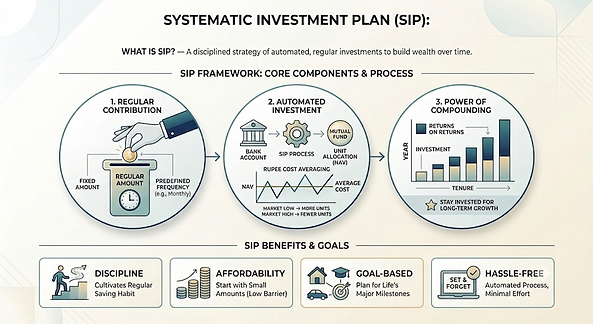
Systematic Investment Plan is a smart way to invest a set amount of money into mutual funds on a regular basis into investment products such as mutual funds on a regular schedule such as every month.
Customization: SIPs can be tailored to meet individual investment goals, allowing investors to choose the underlying assets, maturity period, and risk levels.
Capital Protection: Many structured plans offer some level of capital protection, ensuring that investors do not lose their initial investment, even if the market performs poorly.
Defined Outcomes: Investors can identify the potential outcomes of their investments in advance, making it easier to plan for future financial needs.
How Do Systematic Investment Plan Work?
Systematic Investment Plan typically involve the following steps:
Selection of Underlying Assets: Investors choose a combination of assets, such as equities, bonds, or commodities, that align with their financial goals.
Investment Horizon: The investor decides on the duration of the investment, which can range from a few months to several years.
Risk Assessment: Investors assess their risk tolerance, which will influence the structure of the investment plan.
Derivatives Usage: The plan may incorporate derivatives, such as options or futures, to enhance returns or for hedging.
Monitoring and Adjustment: Throughout the investment period, the performance of the underlying assets is monitored, and adjustments can be made if necessary.
Benefits of Systematic Investment Plan
Structured Investment Plans offer several advantages for investors:
1. Flexibility
SIPs allow investors to customize their investment strategies based on their financial goals, risk appetite, and market conditions. This flexibility can lead to more effective wealth management.
2. Risk Management
With built-in capital protection features, SIPs can help mitigate risks associated with market volatility. This is particularly appealing for conservative investors who prioritize capital preservation.
3. Potential for Higher Returns
By using equities, structured plans can provide opportunities for enhanced returns compared to traditional investment options. This can be especially beneficial in bullish market conditions.
4. Predictable Outcomes
Investors can have a clearer understanding of potential returns and risks associated with their investments. This predictability can aid in financial planning and decision-making.
Considerations When Investing in Systematic Investment Plans
While SIPs offer numerous benefits, there are important considerations to keep in mind:
1. Complexity
SIPs in mutual fund can be complex and may require a thorough understanding of the underlying assets and derivatives involved. Investors should ensure they fully comprehend the product before investing.
2. Costs and Fees
SIPs may come with various fees, including management fees, performance fees, and transaction costs. It is essential to understand these costs and how they may impact overall returns.
3. Market Risk
Despite capital protection features, SIPs are not entirely risk-free. Market fluctuations can still affect the performance of the underlying assets, and investors should be prepared for potential losses.
4. Liquidity
Some systematic plans may have limited liquidity, meaning investors may not be able to access their funds until the maturity date. This can be a drawback for those who may need immediate access to their investments.
There are several types of funds, each designed to meet different investment objectives:
1. Capital Protected Plans
These plans guarantee the return of the initial investment at maturity, regardless of market performance. They are ideal for conservative investors seeking capital preservation.
2. Equity Plans
Market linked plans are tied to the performance of specific securities. The returns are based on the performance of these underlying assets, making them suitable for investors looking to capitalize on market trends.
3. Hybrid Plans
Hybrid plans combine elements of stocks and debt, offering growth and safety. These plans can be tailored to meet individual investor preferences.
4.Multi asset plans
Multi asset funds invests in minimum 3 asset classes like equity, debt, and commodity like gold, silver. These plans to lower risk and manage market ups and downs.
How to Choose the Right Structured Investment Plan
Selecting the right structured investment plan requires careful consideration of several factors:
1. Define Your Financial Goals
Before investing, clearly outline your financial objectives. Are you looking for capital preservation, income generation, or growth? Understanding your goals will help you choose the most suitable plan.
2. Assess Your Risk Tolerance
Evaluate your risk appetite. Are you comfortable with potential losses in exchange for higher returns, or do you prefer a more conservative approach? Your risk tolerance will guide your investment choices.
3. Consult a Financial Advisor
If you are unsure about your finances, consider consulting a financial advisor. They can provide personalized guidance based on your financial situation and investment goals.
Conclusion
Systematic Investment Plans offer a unique way to invest, combining flexibility, risk management, and the potential for enhanced returns. By understanding how these plans work and considering your financial goals and risk tolerance, you can make informed investment decisions. As with any investment, it is crucial to conduct thorough research and seek professional advice when necessary.
By taking these steps, you can harness the benefits of SIPs and work towards achieving your financial aspirations.


Comments